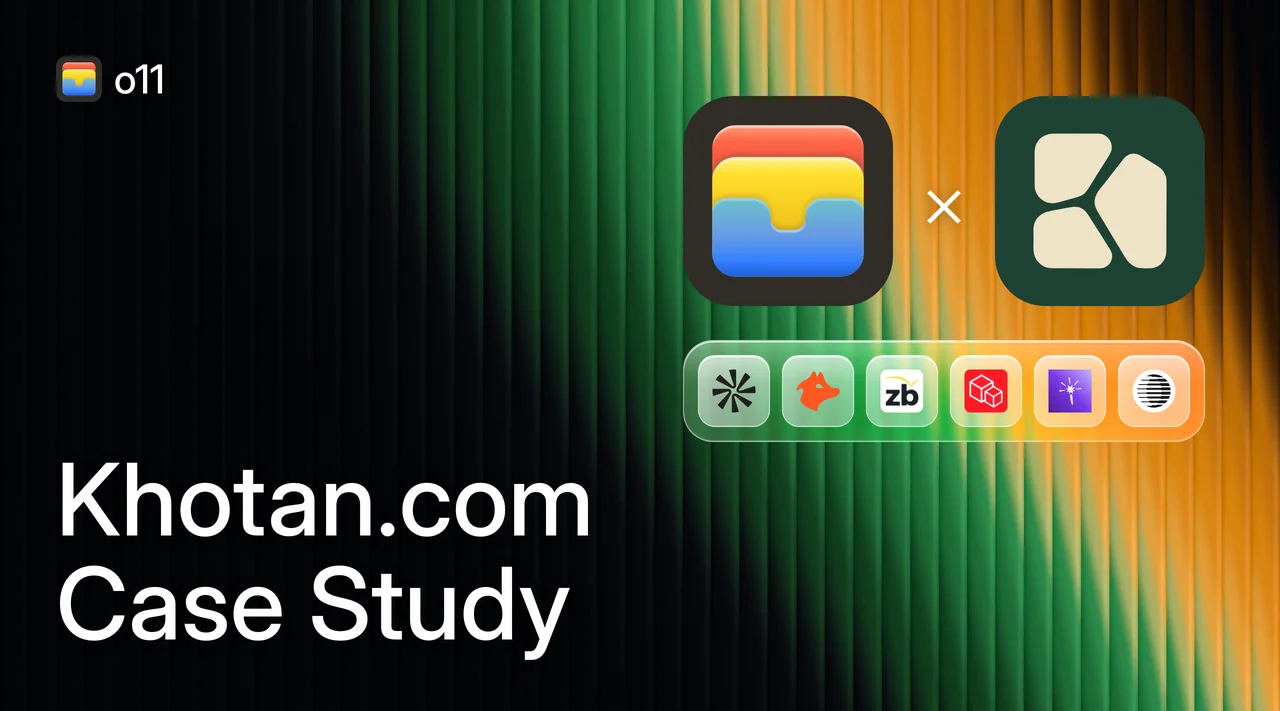
Khotan, a Y Combinator procurement startup, needed accurate contact data on hard-to-find buyers, and it needed it without a data budget. Instead of signing up for a stack of lead data vendors, Khotan connected its Codex agent to one o11 card. The agent pulled data from ten providers, cross-checked results across sources, and paid only for the lookups it ran. There were no subscriptions, no onboarding calls and no contracts, and it worked the day Khotan signed up.
“o11 is probably my most loved product over the last month. It’s completely changed the game for how we do outbound sales and any sort of prospecting and enrichment. Every day, I’m finding new use cases for the product, and I really enjoy how it’s optimized my workflows. I never thought I would be this much of a fan of agentic commerce.”
Adeep Mitra, Co-founder and CEO, Khotan
At a glance
- Company: Khotan, formerly Pollinate
- What they do: Custom procurement software and AI agents that enter orders and supplier invoices into a company’s ERP
- Headquarters: San Francisco, California
- Backed by: Y Combinator, Winter 2026
- Sales: Founder-led. Adeep Mitra, co-founder and CEO, runs sales himself
- Agent: OpenAI Codex, connected to o11 over MCP
- Use case: Outbound prospecting, contact enrichment and email verification
- Data sources the agent used: Apollo, Parallel, Serper, Dropleads, Hunter, Prospeo, LeadMagic, ContactOut, ZeroBounce and Icypeas
Highlights
- A fraction of the cost of a data stack. Khotan paid per lookup, only for the data it used, instead of a monthly plan at every vendor.
- Ten data sources from one card. People search, enrichment, email finding and verification, all through a single o11 balance.
- Accuracy built in. People were cross-checked against a second source, and work emails were was verified before it went on a list.
- No subscriptions, no onboarding. No sales calls, contracts, seats or API keys. The agent was pulling data the day Khotan signed up.
Khotan in brief
Khotan builds custom procurement software for businesses that buy and sell physical goods. Its AI agents read orders and supplier invoices and enter them into the customer’s ERP, following that company’s own rules, approvals and exceptions. The team has integrated with 11 supply-chain ERPs, and its first pilot customer rolled Khotan out to every location.
Adeep Mitra (CEO) and Corey Berther (CTO), friends from the University of Queensland, started the company in Brisbane as Pollinate. They began by fixing produce ordering for restaurants, joined Y Combinator’s Winter 2026 batch, and now count Anchor Packaging, Green Endeavour and Chief Nutrition among their customers. Adeep runs sales himself. Before Khotan he ran a marketing and events agency and was a founding engineer at Transfoorm.
See how Khotan’s agents handle orders and invoices at khotan.com.
The challenge: good data is expensive and slow to buy
Khotan sells to the people who key in orders and invoices by hand: finance and operations leads at suppliers and wholesalers. Most work at private Australian companies with little public data about who works there.
No single lead database covers that market well. One vendor finds the people, another finds their email, a third checks it won’t bounce, and coverage changes with country and company size. Getting good coverage usually means paying for several of them at once.
Each one comes with its own price of entry: an annual plan or a monthly minimum, per-seat pricing, a sales call, an onboarding session and an API key to manage. For a two-person startup, that is real money and weeks of setup spent before knowing whether a vendor even covers the market. Data bought in bulk also goes stale, so a cheap list that bounces costs more in the end.
“Every data vendor wanted a plan, a key and a minimum spend before we even knew if they covered Australian wholesalers. We’d have burned weeks just finding out which one worked.”
Adeep Mitra, Co-founder and CEO, Khotan
The solution: every data source, pay per lookup
Adeep signed up for o11, added funds and connected Codex to his o11 card. That was the whole setup. From there the agent did the work. Before each campaign it searched o11’s catalog, read each tool’s inputs and price, and checked the card’s balance and permissions. Then it ran the same five steps for every target company.
1. Find the people
The agent sent plain-language requests, such as “current owners, managing directors or finance managers at” a named wholesaler, to Parallel’s people search and Apollo, and got back named staff with job titles.
2. Confirm they still hold the role
Apollo person records, LinkedIn profile lookups and Serper web searches checked that each person was current before the agent paid for their contact details. Cross-checking against a second source kept the lists accurate and avoided paying to enrich people who had already moved on.
3. Find the work email
The agent spread email lookups across Dropleads, Hunter, Prospeo, LeadMagic and ContactOut, using whichever returned results for that company’s size and market. With every finder on one card, it could use the best one for each company instead of the one Khotan happened to subscribe to.
4. Verify before anything is sent
ZeroBounce, Icypeas and Hunter checked each address for bounces and catch-all domains, so invalid and risky addresses came off the list before outreach.
5. Switch when a provider stops working
When one email finder started refusing requests mid-campaign, the agent moved the remaining lookups to Hunter and Dropleads without stopping the run or asking Adeep to open a new account.
Every call was priced and held against the card before the provider was contacted. Failed calls were not charged, and if a call cost less than quoted, the difference went straight back to the balance.
Three campaigns, each closer to the buyer
Across three campaigns, Khotan narrowed in on its buyer:
- Enterprise AI and finance buyers: CIOs, CFOs, COOs and heads of automation, procurement and finance transformation at large Australian companies.
- Australian SMB leaders: founders, managing directors and sales leaders at small and mid-sized businesses.
- Fresh-produce wholesalers: owners, CFOs, financial controllers and operations managers at Australian fruit and vegetable wholesalers.
The third is closest to Khotan’s roots. A produce supplier’s finance team is exactly who enters orders and supplier invoices by hand, the job Khotan’s agents take over. Running a new campaign cost nothing extra to set up: the agent simply used the sources that worked best for the new market.
The results: more data, better data, far less spend
- Extremely low cost. Khotan paid only for the lookups its agent ran, with no subscriptions, seats, minimums or annual contracts.
- Data from ten sources. People, roles, work emails and, for wholesalers, phone numbers, all from one card.
- High accuracy. Contacts were confirmed against a second source, and invalid or risky emails were removed before anything was sent.
- An immediate fix. No vendor onboarding and no procurement process. The agent was running campaigns the day Khotan signed up.
- New uses every day. What started as outbound research has grown into prospecting and enrichment across Khotan’s sales work.
“I gave the agent a target and a budget and let it run. It picked the providers, switched when one stopped working, and never went past the limit on the card. That’s the only way outbound works when the founders are also building the product.”
Adeep Mitra, Co-founder and CEO, Khotan
Why it worked for a founder-led team
Pay for data, not for access. Most data vendors charge for the right to use them before you get a single record. With o11, Khotan paid per lookup across every source, so its spend matched the data it actually used.
More sources means better data. No single vendor covers private Australian companies well. Having ten sources on one card let the agent cross-check people and emails, and use the best source for each market.
No onboarding, ever. Trying a new provider cost one call, not a sales call, a contract and a monthly plan. The agent could add a source mid-campaign without Adeep lifting a finger.
Spending he could leave running. Every call was priced and held before it ran, failed calls were free, and the card’s limits applied to everything the agent did.
To build the same workflow, start with a lead research agent without a full sales stack and spending limits that don’t interrupt useful work.
Frequently asked questions
What is o11?
o11 gives AI agents one wallet for paid tools and data. An agent connects once, finds tools in o11’s catalog, and pays per call from a card with spending limits set by its owner, without separate accounts or subscriptions at each provider.
How much does lead data cost through o11?
You pay per lookup, with no subscription, seat fee or minimum. Failed calls are not charged, so you pay only for data you actually receive.
Which AI agents can use o11?
Any agent that can connect to an MCP server, including Codex, Claude Code and Cursor. Khotan used Codex.
Do I need my own Apollo, Hunter or ZeroBounce account?
No. Calls run on o11’s provider accounts by default and are charged per call to your card. If you already have an account with a provider, you can connect it instead.
How does o11 keep an agent’s spending under control?
Each call is priced and held against the card before it runs. The card’s limits and permissions apply to every call, and failed calls are not charged.
Learn more about Khotan
See what Khotan is building at khotan.com.